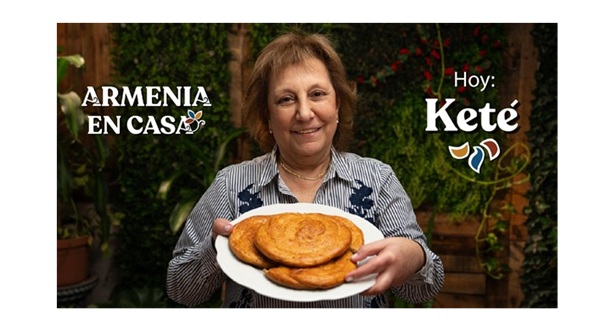
Keteh: The Flavor of Armenian Memory
Among the many specialties of Armenian cuisine, keteh (Քեթէ) holds a special place. More than a simple baked pastry, it is an expression of the history, family life, and cultural identity of a people who have preserved their traditions through the centuries.
Considered one of the oldest and most beloved recipes in Armenian gastronomy, keteh appears in numerous regional variations. It may be plain or filled, yet in all its forms it shares one essential characteristic: it has accompanied the daily lives of generations of Armenians.
Food historians associate keteh with a broad family of enriched breads and pastries that developed throughout the Caucasus and Anatolia from peasant recipes passed down orally through generations. Its preparation required ingredients available to most families: flour, butter or animal fat, yogurt or fermented milk, and occasionally eggs.
Unlike dishes reserved for special celebrations, keteh formed part of the daily diet in many regions of historic Armenia. Its practicality, nutritional value, and ability to keep well made it an ideal food for agricultural workdays and long journeys.
Over time, each region developed its own version. Some varieties were flat and round, while others were filled. In certain areas, they were prepared with joriz (khoriz), a mixture of toasted flour and butter that gave the pastry its distinctive crumbly texture and unmistakable flavor, characteristic of many traditional recipes.
Following the Armenian Genocide and the dispersion of Armenian communities throughout the world, keteh embarked on a new journey alongside exiled families. In countries such as Argentina, Lebanon, Syria, France, and the United States, it continued to be prepared in homes as a way of preserving a connection to the ancestral homeland and passing cultural heritage on to future generations.
Even today, in many diaspora households, the aroma of freshly baked keteh evokes memories of grandmothers kneading dough in the kitchen, family gatherings, and shared celebrations.
Each piece contains a story passed down from generation to generation, transforming this simple pastry into a true symbol of memory, belonging, and Armenian identity.
https://youtu.be/1nmmAKKARr4
https://www.instagram.com/reel/DY9mugiNYGT/?igsh=bG8zMHFiaTE0ZXly